Aneesh Sathe
Untitled
August 7, 2025
Godzilla minus one had no business being that good!

Digital Garden - Tech Tidbit
August 7, 2025
I’ve long used quarto and github pages to post in my studio. It works great. For many years I have also tried to publish my wiki/digital garden but it always kind of sucked.

I had tried free programs like logseq and foam, and they were ok, but overloaded for my tastes. I like simple markdown files. Obsidian! Roam! I hear you, but no, I’m not going to be paying either to let me have control over data I generate.
Hence two intertwined issues persisted:
- Separating my note taking from the wiki meant that the wiki rarely got updated even though the daily notes overflowed with interesting links and things.
- The free Github pages needs repos to be public. This means that I could not realistically combine my daily logs and the wiki.
Impossible to solve…. Or was it?
What if there is a world beyond Github? #
There is this company called Cloudflare. You may have heard of it. If not, you’ve certainly been affected by it. They are a critical piece infrastructure for the internet. They also happen to have some interesting offerings.
One of them is cloudflare pages. The service is very much like github pages they enable hosting of static sites using various git repos, including github. You can specify a branch to build the site from and they take care of the rest. They can even use private repos… yay!
This solves problem 2. If nothing else, I can take markdown notes and have the conveniences of git and just lock it all behind a password thing that cloudflare also provides.
I almost set this up… but the settings page on cloudflare gave me an idea.
They allow subdomains to also be password protected. This turned out to be just the thing I needed. Now my wiki has a public section and a one-time-password protected private section for my daily notes.
I’ve logged my approach here: Deploying Cloudflare pages and setting passwords
Links 20250803
August 4, 2025
Writing (almost) every day for the past month has been exhausting. It slowed down me reading significantly to say the least. But it proved a point to myself, that I can.
I’ll be trying to write slightly longer posts maybe once or twice a week. I still don’t feel that I’m in the proper writing mode yet that I can stick to it if I take a month to write a long high-quality essay. I’m aiming for mediocre, but done.
Here’s some links
Back to the Future:
Seems RSS and taking responsibility for your corner of the internet is becoming a thing, again.
https://www.wired.com/story/a-new-era-for-wired-that-starts-with-you/
https://www.theverge.com/bulletin/710925/the-verge-is-getting-way-more-personal-with-following-feeds
https://www.citationneeded.news/curate-with-rss/
https://daringfireball.net/linked/2025/08/03/how-to-leave-substack
https://www.wired.com/story/rss-readers-feedly-inoreader-old-reader/
https://gilest.org/notes/rss-feels.html
Podcast: Staying Decent in an Indecent Society with Ian Buruma:
https://hac.podbean.com/e/staying-decent-in-an-indecent-society-with-ian-buruma-bonus-episode/
Be Cheerful and Live your life
https://www.openculture.com/2025/07/archaeologists-discover-a-2400-year-old-skeleton-mosaic.html
The Always Wonderful Bluey Teaches Resilience:
https://theconversation.com/researchers-watched-150-episodes-of-bluey-they-found-it-can-teach-kids-about-resilience-for-real-life-262202
Look, we really really can’t go back in time:
https://www.quantamagazine.org/epic-effort-to-ground-physics-in-math-opens-up-the-secrets-of-time-20250611/
The Small God of the Internet
August 2, 2025
It was a small announcement on an innocuous page about “spring cleaning”. The herald, some guy with the kind of name that promised he was all yours. Four sentences you only find because you were already looking for a shortcuts through life. A paragraph, tidy as a folded handkerchief, explained that a certain popular reader of feeds was retiring in four months’ time. Somewhere in the draughty back alleys of the web, a small god cleared his throat. Once he had roared every morning in a thousand offices. Now, when people clicked for their daily liturgy, the sound he made was… domesticated.
He is called ArrEsEs by those who enjoy syllables. He wears a round orange halo with three neat ripples in it. Strictly speaking, this is an icon1, but gods are not strict about these things. He presides over the River of Posts, which is less picturesque than it sounds and runs through everyone’s house at once. His priests are librarians and tinkerers and persons who believe in putting things in order so they can be pleasantly disordered later. The temple benches are arranged in feeds. The chief sacrament is “Mark All As Read,” which is the kind of absolution that leaves you lighter and vaguely suspicious you’ve got away with something.
There was a time the great city-temples kept a candle lit for him right on their threshold. The Fox of Fire invited him in and called it Live Bookmarks.2 The moldable church, once a suit, then a car, then a journey, in typical style stamped “RSS” beside the address like a house number. The Explorer adopted the little orange beacon with the enthusiasm of someone who has been told there will be cake. The Singers built him a pew and handed out hymnals. You could walk into almost any shrine and find his votive lamp glowing: “The river comes this way.” Later, accountants, the men behind the man who was yours, discovered that candles are unmonetizable and, one by one, the lamps were tidied into drawers that say “More…”.
ArrEsEs has lineage. Long before he knocked on doors with a bundle of headlines, there was Old Mother Press, the iron-fingered goddess of moveable type, patron of ink that bites and paper that complains. Her creed was simple: get the word out. She marched letters into columns and columns into broadsides until villages woke up arguing the same argument.3* ArrEsEs is her great-grandchild—quick-footed, soft-spoken—who learned to carry the broadsheet to each door at once and wait politely on the mat. He still bears her family look: text in tidy rows, dates that mind their place, headlines that know how to stand up straight.**
Four months after the Announcement, the big temple shut its doors with a soft click. The congregation wandered off in small, stubborn knots and started chapels in back rooms with unhelpful names like OGRP4. ArrEsEs took to traveling again, coat collar up, suitcase full of headlines, knocking on back doors at respectable intervals. “No hurry,” he would say, leaving the bundle on the step. “When you’re ready.” The larger gods of the Square ring bells until you come out in your slippers; this one waits with the patience of bread.
Like all small gods, he thrives on little rites. He smiles when you put his name plainly on your door: a link that says feed without a blush. He approves of bogrolls blogrolls, because they are how villages point at one another and remember they are villages. He warms to OPML, which is a pilgrim’s list people swap like seed packets. He’s indulgent about the details—/rss.xml, /atom.xml, /feed, he will answer to all of them—but he purrs (quietly; dignified creature) for a cleanly formed offering and a sensible update cadence5.
His miracles are modest and cannot be tallied on a quarterly slide. He brings things in the order they happened. He does silence properly. The river arrives in the morning with twenty-seven items; you read two, save three, and let the rest drift by with the calm certainty that rivers do not take offense. He remembers what you finished. He promises tomorrow will come with its own bundle, and if you happen to be away, he will keep the stack neat and not wedge a “You Might Also Like” leaflet between your socks.
These days, though, ArrEsEs is lean at the ribs. The big estates threw dams across his tributaries and called them platforms. Good water disappeared behind walls; the rest was coaxed into ornamental channels that loop the palace and reflect only the palace. Where streams once argued cheerfully, they now mutter through sluices and churn a Gloomwheel that turns and turns without making flour—an endless thumb-crank that insists there is more, and worse, if you’ll just keep scrolling. He can drink from it, but it leaves a taste of tin and yesterday’s news.
A god’s displeasure tells you more than his blessings. His is mild. If you hide the feed, he grows thin around the edges. If you build a house that is only a façade until seven JSters haul in the furniture, he coughs and brings you only the headline and a smell of varnish6. If you replace paragraphs with an endless corridor, he develops the kind of seasickness that keeps old sailors ashore. He does not smite. He sulks, which is worse, because you may not notice until you wonder where everyone went.
Still, belief has a way of pooling in low places. In the quiet hours, the little chapels hum: home pages with kettles on, personal sites that remember how to wave, gardeners who publish their lists of other gardeners. Somewhere, a reader you’ve never met presses a small, homely button that says subscribe. The god straightens, just a touch. He is gentler than his grandmother who rattled windows with every edition, but the family gift endures. If you invite him, tomorrow he will be there, on your step, with a bundle of fresh pages and a polite cough. You can let him in, or make tea first. He’ll wait. He always has.
Heavily edited sloptraption.
Looking Forward to Montaigne
July 31, 2025
As part of the Contraptions book club we will be reading the Essays of Montaigne. I actually started to read the Donald Frame translations, but felt I needed more context. In the book club, Paul Millerd had recommended Sarah Blackwell’s book on the life of Montaigne. I just finished it and I was left feeling rather warm.
In contrast I was left rather cold and unsure by a recent podcast on a recent book by Byung-Chul Han. The book is titled The Crisis of Narration and covers the idea that we have lost the ability to tell good stories. Stories, Han says, create a shared reality instead stories have been turned into a commodity to create consumers. Storytelling has become storyselling. As far as I know, Han doesn’t offer any solutions. Social media has turned a dark corner but it would have been nice to know what we can do, if anything. Montaigne seems to offer some relief.
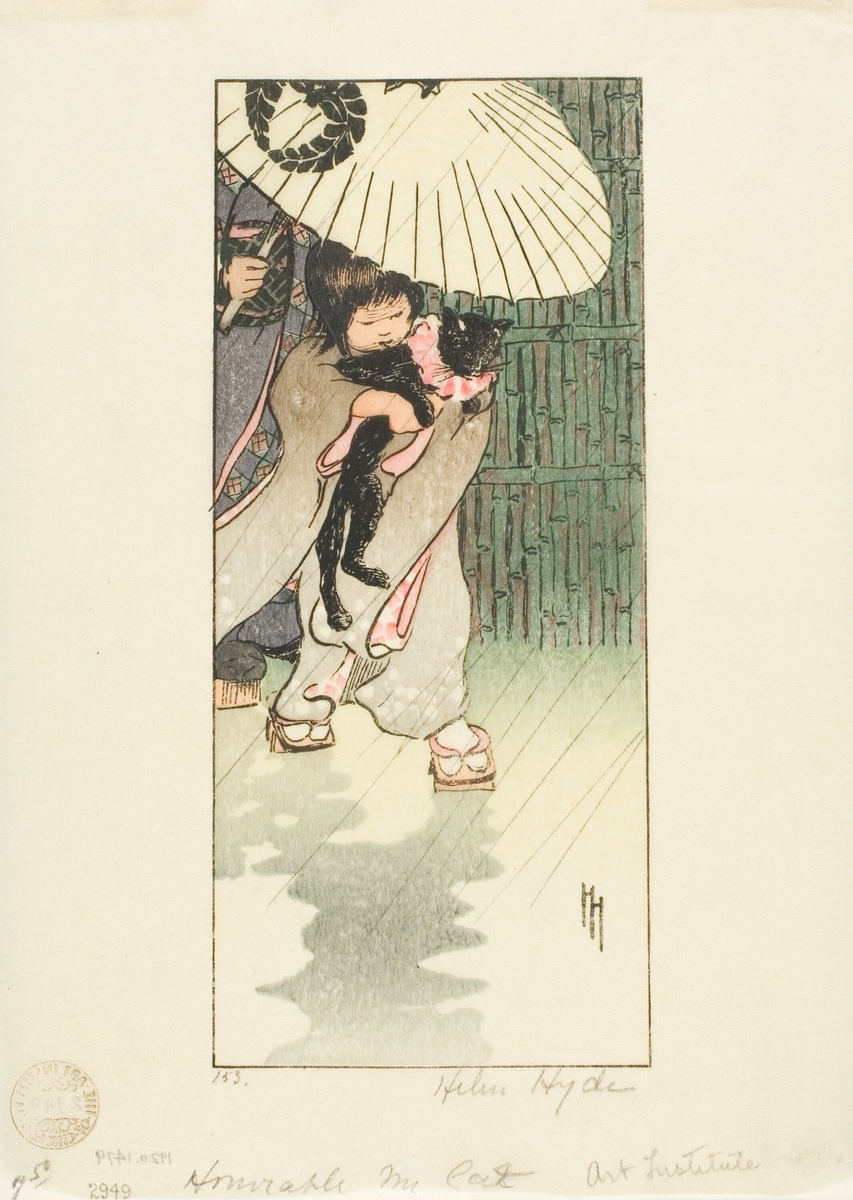
Being literally the first person to write essays, and btw a cat’s person, Montaigne writes in a way that one could think of as storyselling. But you look deeper and it turns out to not be the case. He writes in a frank and meandering way that reminds of the old internet. Dead for 500 years, M seems more real as a person than the influencers ever could.
Now I just happen to have come across these two sources in a temporal coincidence, so, to quote Montaigne, what do I know, but writing and thinking like Montaigne could be the antidote to Han’s doom. Maybe we don’t need a global story thread, but knowing about how you thwarted the bugs in your balcony garden would create a sense of liveness that social media has stolen from us.
I’ll be reading Don Quixote and Montaigne’s essays over the next two months and I’m certain my views will change. Right now, I’m thinking having the average, mediocre, lens to life will take us through these dark days.
I leave you with two wonderful quotes (obviously about cats) from MdM:
“When I play with my cat, who knows whether she is not amusing herself with me more than I with her.”
“In nine lifetimes, you’ll never know as much about your cat as your cat knows about you.”