Aneesh Sathe
Royalty, Administration, and Antimemetics
July 12, 2025
I was all of 15 when defenestration was forever implanted in my mind. It means to throw someone out the window. It happened in Prague, 1618. Some important people were defenestrated, fell 70 feet, landed in dung. This led to the thirty years war and the coining of the word ‘defenestration’. Defenestrating happened to important, visible, people held responsible for mismanagement leading to widespread discontent. While the defenestrated may represent the idea, surely we can’t imagine that it was that specific person who was going around causing the suffering. No, they had minions. Here we explore a bit of their story.
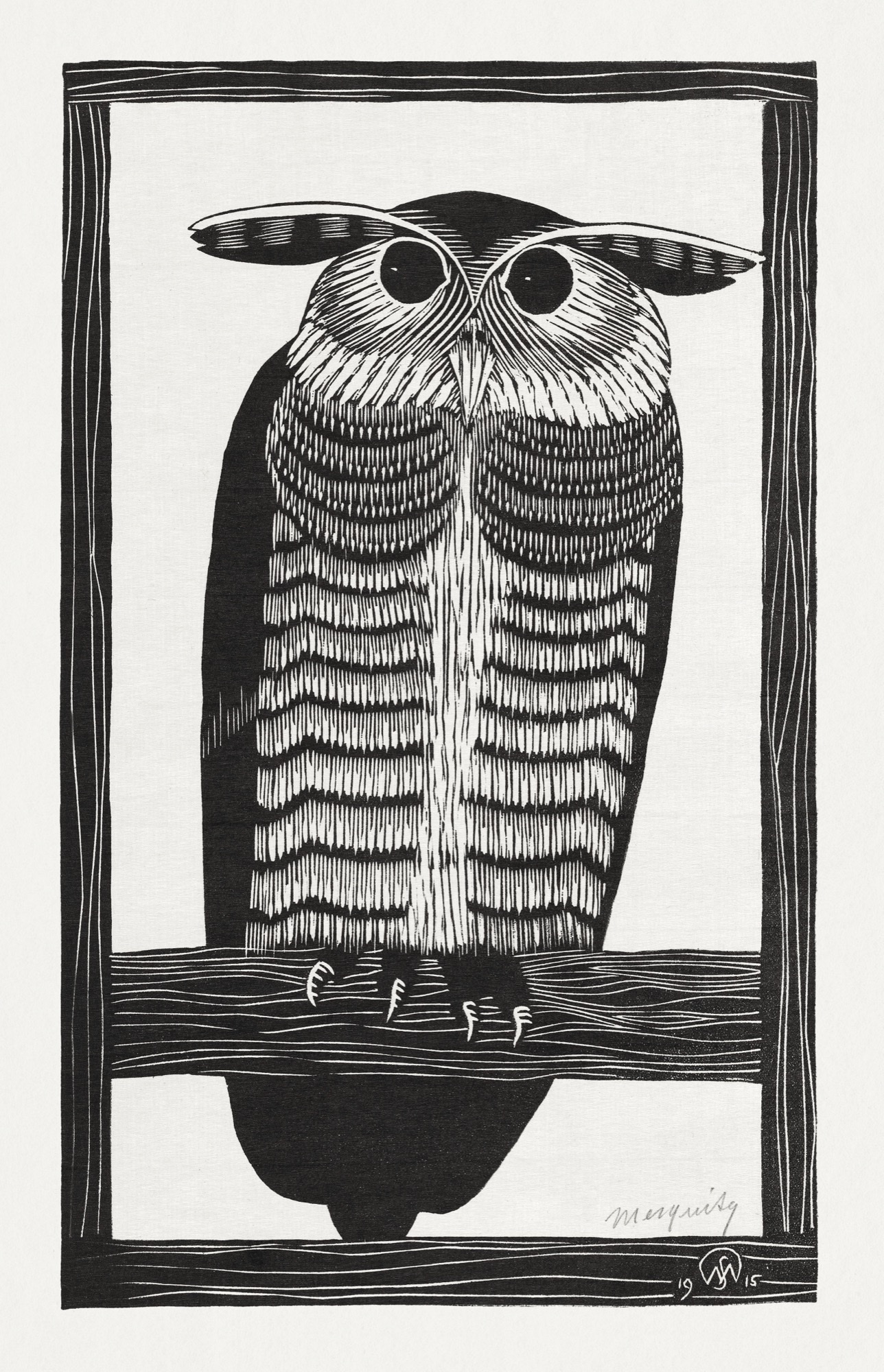
Royalty is meant to be seen. They were either chosen by or were the local gods to lead the people. They were the head of everything and if something were to go wrong it was their responsibility. Royalty also means creating good memes. Whether the Alhambra, Taj Mahal, or Beijing projecting power through architectural memes was the standard.
Administration and bureaucratic structures is the silent clockwork that powers the projection. These guys, are antimemetic. The antimeme is a recent invention and denotes ideas that have high impact but are hard to spread. This is important because when the tax burden gets too high you want the peasants to go for the king not the local tax collector.
The Mughal emperors were the head of the administrative machinery with final say over all important matters. The administration itself was antimemetic in nature. The provincial officials such as the bakhshi, sadr as-sudr, and finance minister reported directly to the central government rather than the subahdar (provincial governor). Matrix organization, I hear you thinking. This complex, multi-layered reporting structure, while designed for central control, also diffused responsibility and made the precise locus of decision-making less transparent to external observers and even to other officials.
In the Ming dynasty, the Hongwu Emperor abolished the Central Secretariat to assume personal control. However, the volume of letters got so high that he soon appointed a few grand secretaries. They never held a high rank and always merely “recorded imperial decisions”. If merely were a boxer he would be a heavyweight. Can’t blame that guy with the pen if he’s just doing what the king asks him to.
From the al-Andalus through the Ottomans, Safavids, and Mughals the the ulama shaped legal systems and molded public morality. Of course the monarchs decrees but the ulama interpreted them and applied them as law into daily life. This interpretive authority, operating subtly within the legal and religious bureaucracy, allowed for continuous adaptation and influence without the visible, attributable acts of formal legislation, making it profoundly antimemetic.
Let me end with the quote from the wonderful, and joyfully mimetic, Yes, Minister:
“Hacker: Humphrey, did you know that 20% of all honours go to civil servants?
Sir Humphrey: A fitting tribute to their devotion to duty, Minister.
Hacker: No, their duty is what they get paid for. The rest of the population has to do something extra to get an honour. Something special. They work for 27 years with mentally handicapped children six nights a week to get an MBE. Your knighthoods simply come up with the rations.
Sir Humphrey: Minister, her Majesty’s civil servants spend their lives working for a modest wage and at the end, they retire into obscurity. Honours are a small reward for a lifetime of loyal, self-effacing discretion and devoted service to Her Majesty, and to the nation.
Hacker: “A modest wage”, did you say?
Sir Humphrey: Alas, yes.
Hacker: Humphrey, you get over £30,000 a year! That’s £7,000 more than I get.
Sir Humphrey: Yes, but still relatively the modest wage.
Hacker: Relative to whom?
Sir Humphrey: Well, Elizabeth Taylor, for example.
Hacker: Humphrey, you are not relative to Elizabeth Taylor. There are important differences.
Sir Humphrey: Indeed, yes. She didn’t get a first at Oxford.
Hacker: And you do not retire into obscurity?! You take a massive index-linked pension and go off to become directors of oil companies and banks.
Sir Humphrey: Oh, yes, but very obscure directors, Minister.
Hacker: You’re in no danger of the sack. In industry if you screw things up, you get the boot. In the civil service, if you screw things up, I get the boot.
Sir Humphrey: Very droll, Minister, now if you’ve approved the list…”
Sources
Much of the reading and sourcing of material for this was done across books from the Contraptions Book Club and some deep research help.
- Ibn Khaldun: An Intellectual Biography by Robert Irwin
- Monkey King: Journey to the West, the abridged Lovell edition
- Islamic Gunpowder Empires by Dougles E. Streusend
- Kingdoms of Faith by Brian A. Catlos
- Zheng He: China And the Oceans in the Early Ming Dynasty, 1405-1433 by Edward L. Dreyer
- https://en.wikiquote.org/wiki/Yes,_Minister
Beyond the Dataset
July 11, 2025
On the recent season of the show Clarkson’s farm, J.C. goes through great lengths to buy the right pub. As with any sensible buyer, the team does a thorough tear down followed by a big build up before the place is open for business. They survey how the place is built, located, and accessed. In their refresh they ensure that each part of the pub is built with purpose. Even the tractor on the ceiling. The art is in answering the question: How was this place put together?
A data-scientist should be equally fussy. Until we trace how every number was collected, corrected and cleaned, —who measured it, what tool warped it, what assumptions skewed it—we can’t trust the next step in our business to flourish.
Two load-bearing pillars #
While there are many flavors of data science I’m concerned about the analysis that is done in scientific spheres and startups. In this world, the structure held up by two pillars:
- How we measure — the trip from reality to raw numbers. Feature extraction.
- How we compare — the rules that let those numbers answer a question. Statistics and causality.
Both of these related to having a deep understanding of the data generation process. Each from a different angle. A crack in either pillar and whatever sits on top crumbles. Plots, significance, AI predictions, mean nothing.
How we measure #
A misaligned microscope is the digital equivalent of crooked lumber. No amount of massage can birth a photon that never hit the sensor. In fluorescence imaging, the point-spread function tells you how a pin-point of light smears across neighboring pixels; noise reminds you that light itself arrives from and is recorded by at least some randomness. Misjudge either and the cell you call “twice as bright” may be a mirage.
In this data generation process the instrument nuances control what you see. Understanding this enables us to make judgements about what kind of post processing is right and which one may destroy or invent data. For simpler analysis the post processing can stop at cleaner raw data. For developing AI models, this process extends to labeling and analyzing data distributions. Andrew Ng’s approach, in data-centric AI, insists that tightening labels, fixing sensor drift, and writing clear provenance notes often beat fancier models.
How we compare #
Now suppose Clarkson were to test a new fertilizer, fresh goat pellets, only on sunny plots. Any bumper harvest that follows says more about sunshine than about the pellets. Sound comparisons begin long before data arrive. A deep understanding of the science behind the experiment is critical before conducting any statistics. The wrong randomization, controls, and lurking confounder eat away at the foundation of statistics.
This information is not in the data. Only understanding how the experiment was designed and which events preclude others enable us to build a model of the world of the experiment. Taking this lightly has large risks for startups with limited budgets and smaller experiments. A false positive result leads to wasted resources while a false negative presents opportunity costs.
The stakes climb quickly. Early in the COVID-19 pandemic, some regions bragged of lower death rates. Age, testing access, and hospital load varied wildly, yet headlines crowned local policies as miracle cures. When later studies re-leveled the footing, the miracles vanished.
Why the pillars get skipped #
Speed, habit, and misplaced trust. Leo Breiman warned in 2001 that many analysts chase algorithmic accuracy and skip the question of how the data were generated. What he called the “two cultures.” Today’s tooling tempts us even more: auto-charts, one-click models, pretrained everything. They save time—until they cost us the answer.
The other issue is lack of a culture that communicates and shares a common language. Only in academic training is it possible to train a single person to understand the science, the instrumentation, and the statistics sufficiently that their research may be taken seriously. Even then we prefer peer review. There is no such scope in startups. Tasks and expertise must be split. It falls to the data scientist to ensure clarity and collecting information horizontally. It is the job of the leadership to enable this or accept dumb risks.
Opening day #
Clarkson’s pub opening was a monumental task with a thousand details tracked and tackled by an army of experts. Follow the journey from phenomenon to file, guard the twin pillars of measure and compare, and reinforce them up with careful curation and open culture. Do that, and your analysis leaves room for the most important thing: inquiry.
Nothing Ventured
July 10, 2025
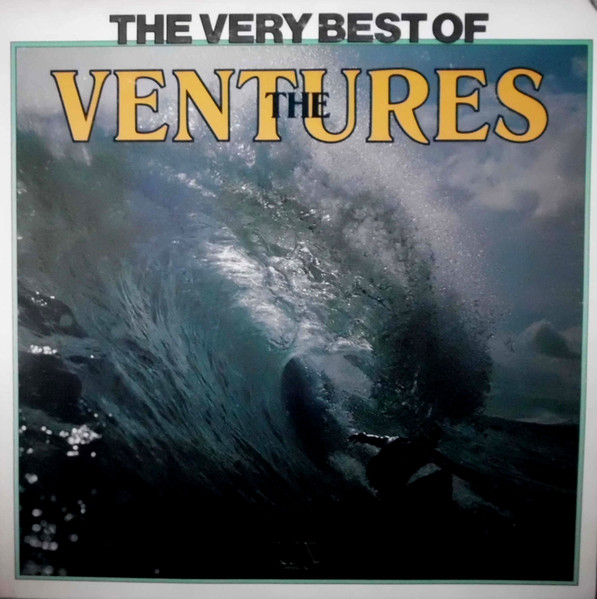
The wave towered over me. Then the sound filled my ears. Not the calm breath of the waves; but it was surf music. I was maybe 3. Song names and artist names were beyond me. There was only the blue-green wave and the twang of the guitar.
I have chased music all my life. Just had to figure out the tools. The record player and the giant speakers taught my first lesson: pressing buttons was joy. In my pursuit I learned in about records, tapes, CDs, mp3, flac, streaming, Napster, torrents, Winamp, VLC, blanks, CD-R/RWs, compression, bit rates, conversion, transfer, backups, VPN, networking, impedance matching, DACs, amplifiers, calibration, ARC, fibre, buying, licensing, and streaming in approximate order.
I discovered that they were called The Ventures by accident. Late in the college years I watched Pulp Fiction and wanted all the music. This one wasn’t quite home but it was the right street. It was surf music.
The hunt was on. Only a notion of the song and the confidence that I would know it when I heard it. I didn’t know the name of the album only that it had a big wave on the cover. It took me the better part of 6 months, on slow DSL, trawling all the sources I knew. Listening for that drum fade-in. Then one day I found it.
It’s been decades since the record player stopped spinning. I’ve moved a dozen times, the records were lost. I am the default A/V guy and love the role. Now I live in one of the surfiest places on the planet, the current still pulls but I walk, don’t run.
Rejected In Paris
July 9, 2025
I got told off by The Paris Review today. Maybe it wasn’t necessarily directed at me, but as they say in the, now old, new lingo, I felt attacked. You see, recently, drawing on the well of inspiration that is history I succeeded in writing a poem, but not just any poem. I wrote a ghazal.
Those who know me for any amount of time are made aware of my taste for writing poetry. It’s usually pretty bad but I persist, cause why not. The OG is long gone anyway. The ghazal is an especially ambitious type of poetry to be taken up my someone with my modest talents. To make matters worse, as I learned today, the ghazal is really well suited for the Urdu. For all practical matters, I know only English.

For anyone with any little interest in love and romance, being born in South Asia is a special kind of blessing. We are lucky to have had Urdu poetry reach its peak here. Urdu is perhaps the perfect medium to transmit mischief, passion, pain, longing, and the myriad other emotions which are handmaidens to big Love. Not any kind of expert, but all my life I’ve consumed shayari, sher, ghazals, whether in mainstream Bollywood or in sparkling corners of the internet.
Armed with the internet, full of inspiration, my trusty editor, Mir ChatGPT, in the other tab. I decided it was time to go all in. The Ghazal was to be written. It was, it follows all the rules, I even make a self reference in the last couplet as is the tradition, but it lacks oomph. A good sher, a good ghazal, should pierce you and make you blush for it’s andaaz, mischief and audacity.
Mine… well, you can read it here yourself, don’t forget to play the tiny desk concert, it is lovely.
Definitely read The Paris Review article for it’s a great take of view from a writer who transfers the styles of poetry in one language to another.
Social Internet – Lost and Hungry
July 8, 2025
When printing was invented, Europe suddenly had access to all the books that had existed until that point in history. This included everything from mystical texts to astronomical observations. Having no guides to judge quality, some people went off on the deep end. Giordano Bruno is sometimes referred to as the forefather of modern cosmology. He was not. An extreme case, he took mystical click-bait, mixed it with the then-contemporary Copernican theories, and, without any data, invented the infinite universe. Eventually, culture adapted and people started to compare and organize all the data. This act of orienting and place-making led to the scientific revolution.Printing created too much information and we had to learn how to handle it. Today we are in a similar position.
Still in the early days of the internet we sometimes lost the ability to tell signal from noise. Recently Hank Green posted this video where he makes his thesis that we aren’t addicted to content, but are instead starving for information. This strikes me as true.
The companies behind the social internet drown us in noise with just enough signal to keep you coming back. That signal, that hit, is a hint at information that provides orientation. Opportunities for conversation and belief challenging interactions are difficult to experience. As explored in a previous post, as humans are geographical creatures. Phones and the internet are a real part of our environment. Without sufficient places for orientation, we are left glassy eyed, lost. To see why that ‘information hunger’ feels so visceral, consider the simple ladder that links raw signal to a basic survival drive:
Signal → Information → Orientation → Biology
- Signal is any pattern in the environment—visual, auditory, textual—that stands out from background noise. On social platforms this might be a headline, a notification badge, or an unexpected data point.
- Information is signal that has been parsed and interpreted. Your brain (or a community) attaches meaning and relevance: “This headline matters to my work,” or “That data point contradicts my belief.”
- Orientation is what information enables: a clearer, updated internal map of “where I stand and what to do next.” It answers “How does this fit with what I already know?” and “Which way should I move—intellectually, emotionally, physically?”
- Biological need is the evolutionary pressure behind all of this: organisms that build accurate mental maps survive. Humans feel discomfort when our maps are fuzzy (disorientation) and relief or pleasure when new information sharpens them.
A few years ago, my corner of the internet got into waldenponding and promptly logged off. Just kidding. The failure of modern waldenponding makes it clear that this move of turning away from the social internet is not the answer. That would be like giving up on books because there were too many of them. The internet and the social internet in general do provide opportunities Instead, engaging with curiosity allows us to orient ourselves. Having an information shaped content diet opens up a path to a healthier mind. While society learns to put on the right kind of controls as we have on sugar and tobacco, how can we learn to have fun on the internet?
The hunt for knowledge and discovery, even of trivia is immensely enjoyable. Socratic problem solving is a team sport. Everyone has narrow views of the world and our thinking may be based on shaky knowledge. Social internet has so far made our eagerness to win the top emotion in online discourse, Socratic inquiry can transform that into collaborative inquiry. To arrive at better knowledge we must be willing to talk, listen, challenge, and accept. It is only by comparing notes that we open up a topic, a space, for exploration. Each of us and our thoughts are a place in the world. Places create orientation and orientation has the potential to create progress. While progress may not be guaranteed, not engaging in inquiry guarantees disorientation and formlessness.
While printing turned information into data, the social internet has turned information into noise. Social internet companies have tuned our culture to produce low signal-to-noise “content”. As Hank Green put it, we do hunger for information. We hunger because information is orientation. Orientation is a primal biological need to help us navigate our physics-virtual environment. The internet is a place where people share freely and welcome warm interactions. To turn away from the internet because of the culture tuning is the wrong move. The internet has too much to give, engaging from a posture of inquiry is the way. Inquiry satisfies that inner need for place creation and orientation.
The dialogue is the real post.